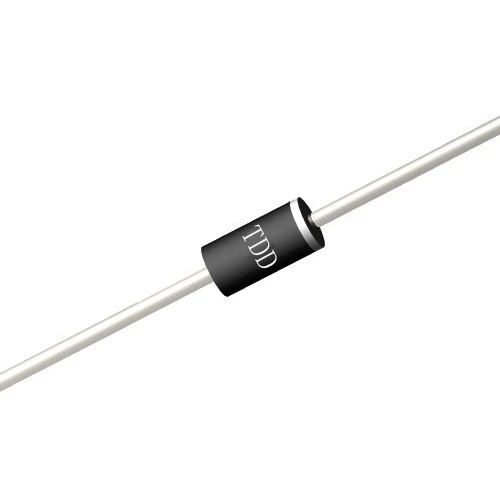
This guide helps buyers evaluate Shenzhen Daya Electronics, a Semiconductor Diode Manufacturer, by asking practical Production Capacity, Packaging, and Traceability Questions for Diode RFQs before placing an order.
Home-Resource-Blog-Production Capacity, Packaging, and Traceability Questions for Diode RFQs
Production Capacity, Packaging, and Traceability Questions for Diode RFQs
Nov.19,2026
Share:
To assess a diode supplier effectively, we recommend working through three connected checks: confirm that the manufacturer can support your forecast and delivery schedule, define packaging that protects the parts and suits your assembly line, and verify that each shipment can be traced to its production and test records. This guide to Production Capacity, Packaging, and Traceability Questions for Diode RFQs is useful whether you are issuing your first request for quotation or managing an established semiconductor supply chain. Use the questions, evidence checklist, and sample RFQ language below to compare suppliers—including Shenzhen Daya Electronics, Co., Ltd.—without relying on assumptions or unverified capability claims.
A practical sourcing guide for Shenzhen Daya Electronics, Co., Ltd.
Evaluate capacity, packaging, and traceability together so the quoted diode can be produced, delivered, and verified as required.
Start with a complete RFQ baseline
Before asking about available capacity, make sure each supplier is quoting the same product and delivery conditions. A capacity answer is only meaningful when it refers to the correct diode, package, quality requirements, and forecast period.
Include these details in your RFQ:
Part definition: manufacturer part number or approved specification, diode type, electrical ratings, package, polarity, and any approved alternates.
Demand: initial order quantity, monthly or quarterly forecast, annual volume, and expected order pattern.
Schedule: requested sample date, first production delivery, repeat-order cadence, and any fixed launch date.
Quality requirements: inspection criteria, applicable qualification or test standards, certificate requirements, and change-notification expectations.
Packaging and logistics: tape-and-reel or other format, quantity per reel or carton, labels, moisture controls where applicable, and shipping destination.
Traceability: required lot information, date-code format, test records, and document retention expectations.
Then ask the supplier to identify assumptions and exclusions in the quotation. This simple step prevents a quoted lead time from being mistaken for a confirmed production slot, or a standard package from being mistaken for a line-ready packaging configuration.
Ask capacity questions that reveal real supply readiness
Next, separate rated capacity from capacity available to your program. A factory may report a monthly output figure, but that figure does not automatically show how much capacity is available for your part, package, or requested delivery window. As a buyer evaluating a Semiconductor Diode Manufacturer, we should ask for the production stages and constraints behind the number.
Questions to include in the RFQ
What is the current lead time for samples, first production, and repeat orders? Ask the supplier to state whether the lead time starts after order confirmation, payment, material availability, or approval of samples.
What is the available monthly allocation for the quoted part number and package? Request the period the figure covers and whether it is committed or indicative.
Which operation is the bottleneck? Ask whether wafer supply, die attach, wire bonding, molding, testing, or final packing constrains output.
How are forecast changes handled? Confirm forecast horizons, order freeze windows, minimum order quantities, and the process for requesting an expedite.
What is the recovery plan? Ask how the supplier would communicate and mitigate a material shortage, equipment interruption, or yield issue.
Are alternate lines or qualified sources available? Confirm whether an alternate requires customer approval, requalification, or a formal change notice.
For a measurable response, request a capacity statement by part number and month, with separate figures for forecast demand and confirmed orders. A practical planning example is to compare a 12-month forecast with a rolling 3-month firm schedule; these are buyer-defined planning windows, not universal industry requirements. Ask for a written update if the supplier's allocation or lead time changes.
Define packaging for protection and production-line compatibility
Packaging is not merely a shipping detail. It affects electrostatic-discharge protection, moisture exposure, component orientation, automated pick-and-place performance, and receiving inspection. In the Production Capacity, Packaging, and Traceability Questions for Diode RFQs process, specify both the protective requirements and the presentation your assembly equipment needs.
Packaging details worth confirming
Package format: tape-and-reel, tube, tray, or bulk, as permitted for the specific diode package.
Reel and tape configuration: pocket dimensions, component orientation, leader and trailer length, quantity per reel, and reel diameter.
ESD protection: confirm the packaging and handling controls required by your product and receiving process.
Moisture sensitivity: where applicable, confirm the moisture sensitivity level, dry-pack requirements, humidity indicator card, desiccant, and bag-seal details.
Labels: specify part number, quantity, lot or date code, country of origin if required, barcode format, and customer-specific fields.
Transport protection: define carton strength, cushioning, palletization, and any restrictions on mixed lots or mixed part numbers.
Ask for a packaging specification or drawing before production. For dimensional interfaces, state the required measurement method and tolerance; for example, a buyer may request a critical reel or carrier-tape dimension to be controlled to 0.01 mm where the supplier confirms that the measurement is feasible and appropriate. Do not apply that tolerance indiscriminately to every packaging feature.
For standards, use the document that matches the risk being controlled. IEC 60286-3 addresses packaging of components for automatic handling, while JEDEC J-STD-033 covers handling, packing, shipping, and use of moisture/reflow-sensitive surface-mount devices. For environmental or reliability testing of electronic components, relevant JESD22 methods may apply; agree on the exact method and acceptance criteria with the supplier. ASTM D5276 is a drop-test method for loaded containers, not a diode electrical test. Standards applicability depends on the component and customer specification, so name the required revision and test scope in the RFQ.
Build traceability into the order, shipment, and records
Once capacity and packaging are clear, establish how you will identify and investigate a shipment throughout its lifecycle. Traceability should connect the delivered units to controlled manufacturing and inspection records—not just to a carton label.
Ask what each lot record can show
Unique lot, batch, or date-code identification on the product packaging and shipping documents.
Production site and relevant manufacturing date information, subject to the supplier's traceability system and disclosure policy.
Applicable incoming-material, in-process, and final-test records.
Certificate of conformance and, when agreed, a certificate of analysis or test summary tied to the shipped lot.
Nonconformance, deviation, and corrective-action references when relevant to the order.
Record-retention period, document retrieval process, and response contact for a quality investigation.
Request a sample label and a redacted sample report during supplier qualification. Check that the part number, lot identification, quantity, and document references agree across the label, packing list, and quality record. If your business requires full genealogy down to wafer or assembly sublots, say so explicitly and confirm the level of detail before purchase.
Use a consistent review scorecard
To compare supplier responses fairly, score evidence rather than polished wording. The following table can be adapted for a sourcing review. Set your own pass criteria according to product risk, forecast stability, and customer obligations.
Review area
Evidence to request
Buyer check
Capacity
Part-specific allocation, lead time, bottleneck explanation, and recovery plan
Does the stated output cover the forecast and required delivery window?
Packaging
Packaging drawing or specification, label sample, and agreed transport controls
Can receiving and assembly use the format without repacking or orientation risk?
Traceability
Sample lot label, certificate, test summary, and retention policy
Can a shipped lot be linked to the agreed production and inspection records?
Quality system
Relevant certifications, inspection plan, and applicable qualification evidence
Are the documents current and applicable to the quoted product and site?
Communication
Named contact, escalation route, and change-notification process
Are response ownership and timing clear for routine and urgent issues?
A 24-hour response target can be included as a buyer-requested service level for acknowledging an RFQ question or urgent quality query. Define what counts as an acknowledgement versus a complete technical answer, and confirm that the supplier agrees to the target. Avoid treating a proposed target as a supplier commitment until it is confirmed in writing.
Apply the questions to a realistic sourcing scenario
Consider an illustrative, anonymized sourcing case: an electronics buyer needs a surface-mount diode in monthly releases, delivered on tape-and-reel. The first quotation lists a short lead time and a large monthly output figure, but does not clarify allocation, reel orientation, or lot documents.
The buyer uses the Production Capacity, Packaging, and Traceability Questions for Diode RFQs checklist to request a part-specific monthly allocation, a lead-time definition, a packaging drawing, a sample label, and a lot-linked final-test summary. The supplier's revised response reveals that the quoted capacity is indicative until the forecast is reviewed, and that the reel orientation needs customer confirmation. The buyer resolves both points before placing the order and adds an agreed change-notification route.
This example is a process illustration, not a claim about a named customer's results or a specific supplier's performance. Its practical lesson is that targeted questions can expose mismatches while changes are still inexpensive—before parts reach receiving inspection or an automated assembly line.
Use a copy-ready RFQ question set
Buyers can paste and tailor the following questions in an RFQ. Replace each bracketed field with the requirement that applies to the program.
Please state sample and production lead times, including the event that starts each lead-time calculation.
Please provide the available monthly allocation for [part number/package] for [forecast period], and distinguish available capacity from confirmed capacity.
Please identify any material, process, test, or packaging bottleneck that could affect the requested delivery schedule.
Please confirm minimum order quantity, order multiples, forecast horizon, and order-change or cancellation rules.
Please provide the packaging format and specification, including orientation, quantity per reel or tray, label fields, and ESD/moisture controls where applicable.
Please identify the applicable inspection and qualification standards, test methods, revisions, and acceptance criteria for this part.
Please confirm which lot-level records can be supplied with each shipment and how quickly records can be retrieved.
Please state the record-retention period and the process for notifying us of product, process, material, site, or packaging changes.
Please provide a sample certificate and a redacted lot-linked test report for review before order placement.
Resolve common RFQ problems before they become delivery issues
Capacity figures do not match the forecast
Ask the supplier to reconcile the figure against your part number, package, order cadence, and forecast horizon. If the gap remains, discuss scheduled releases, safety stock, or an approved alternate—but assess inventory exposure and requalification effort before accepting a workaround.
Packaging samples do not suit the assembly line
Provide your equipment or customer packaging specification and request a pre-production sample. Verify pocket fit, orientation, feed direction, label readability, and reel handling with the receiving and manufacturing teams before authorizing the full run.
Traceability documents are incomplete
Define the minimum acceptable lot identifiers and records in the purchase specification. If a report is available only on request, document the request route and retrieval timing. Do not assume that a generic certificate identifies the exact lots shipped.
Quality claims lack a test basis
Ask which method, revision, sample size, and acceptance criteria support the claim. For example, 100% inspection is meaningful only when the inspected characteristic, equipment, sampling or coverage method, and record are defined. It should not be interpreted as proof that every possible failure mode has been tested.
Supplier responses are slow or unclear
Assign a technical owner and a commercial owner on both sides, set a requested response time, and keep open questions in a dated action log. Escalate unresolved safety, compliance, or launch-critical issues before issuing the purchase order.
What to confirm with a Semiconductor Diode Manufacturer
When evaluating Shenzhen Daya Electronics, Co., Ltd. or another Semiconductor Diode Manufacturer, use the RFQ to request evidence for the specific product and order rather than assuming that general company information applies to every diode. Confirm current capacity, packaging configuration, traceability scope, applicable standards, and any product-specific limitations directly with the supplier.
Keep the final agreed requirements in controlled documents: the quotation, purchase specification, packaging specification, quality agreement, and approved change records. If documents conflict, resolve the conflict in writing before production begins.
Bring the RFQ process to a clear decision
Strong Production Capacity, Packaging, and Traceability Questions for Diode RFQs turn a price request into a supply-risk review. First define the part, forecast, schedule, and quality requirements. Then verify part-specific capacity and lead-time assumptions, approve packaging against both protection needs and assembly-line requirements, and confirm that lot records support the traceability your business requires.
For buyers working with Shenzhen Daya Electronics, Co., Ltd., the same disciplined approach makes supplier discussions more precise and comparable. Ask for evidence, record assumptions, agree on standards and acceptance criteria, and close open issues before releasing the order. Those steps help beginners build a reliable RFQ while giving experienced sourcing teams a repeatable method for controlling diode supply risk.
The rectifier diode is a semiconductor device based on the unidirectional conductivity of the PN junction. Its main function is to convert alternating current energy into direct current energy.